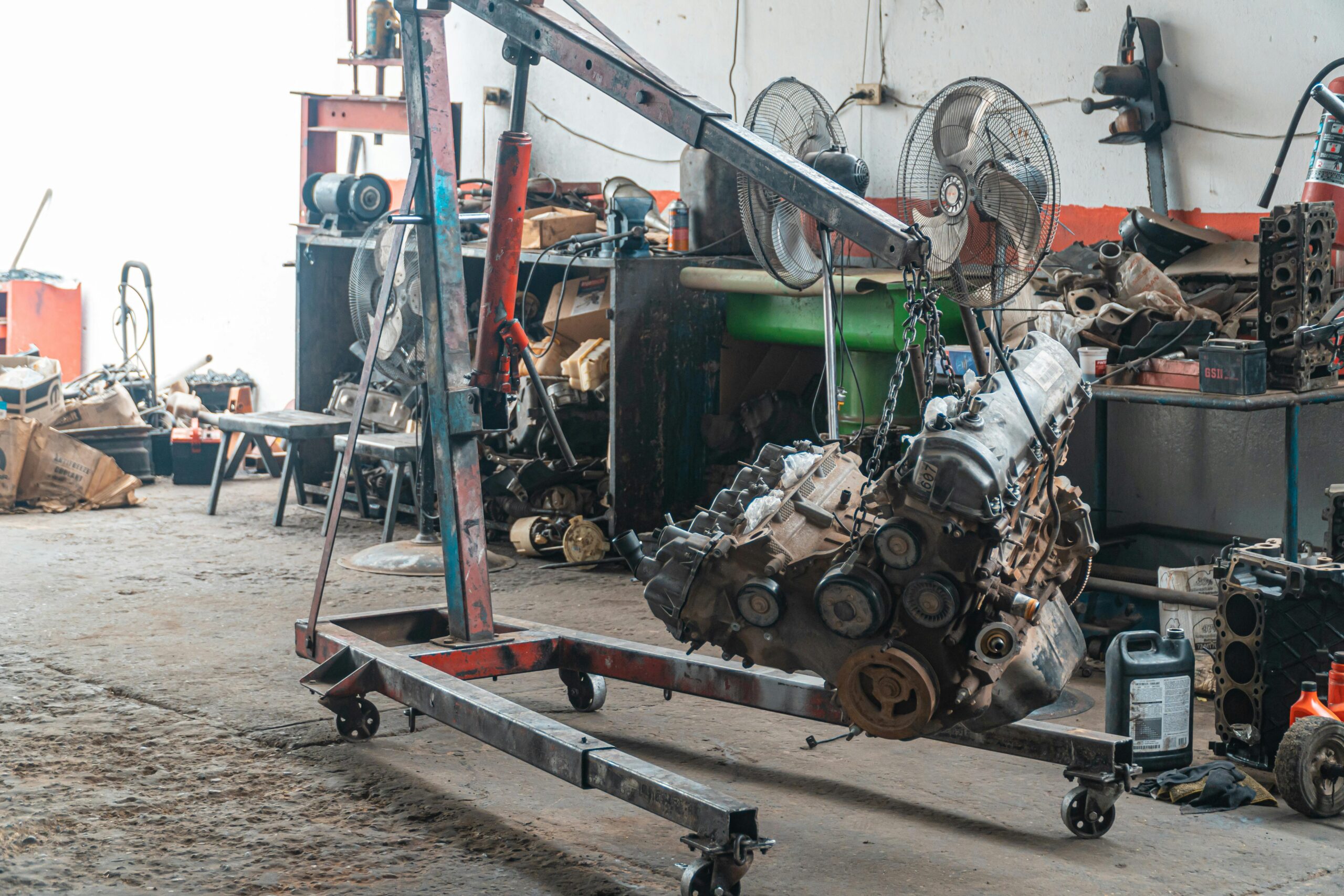
In a world increasingly focused on sustainability, resource efficiency, and responsible consumption, the reuse of
spare parts plays a crucial role. Whether in manufacturing, agriculture, transportation, construction, or electronics, components can often be reused multiple times when handled correctly. Reusing spare parts is not only about reducing costs—it is also about minimizing waste, lowering carbon emissions, and maximizing the value of existing resources.
Spare parts often represent significant financial and material value. When machinery or equipment fails, it is rarely the case that every component is damaged. Many parts can be cleaned, repaired, refurbished, or recalibrated and then reinstalled. By choosing reuse instead of complete replacement, businesses and individuals can significantly extend the lifespan of their equipment.
This approach supports the principles of the circular economy, where products and materials remain in use for as long as possible. Rather than extracting new raw materials and manufacturing new components, we can preserve value by keeping spare parts in circulation. However, successful reuse requires planning, knowledge, and structured processes. When these elements are in place, spare parts can be reused again and again—benefiting both the economy and the environment.
Maintenance strategies that extend the life of spare parts
One of the most effective ways to ensure that spare parts can be reused repeatedly is through proper maintenance. Preventive maintenance programs help identify wear and tear before it develops into critical failure. Regular inspections, lubrication, cleaning, and calibration significantly increase durability.
Many mechanical components wear down gradually rather than breaking suddenly. Bearings, seals, gears, and hydraulic components, for example, can often be restored through refurbishment. By replacing only the worn subcomponents, the main spare parts can return to near-original performance levels.
Documentation is equally important. Keeping detailed service records makes it easier to track how often spare parts have been used, repaired, or tested. This data ensures reliability and safety while supporting informed decision-making.
In many industries, specialized workshops test and certify refurbished spare parts to ensure they meet operational standards. With the right maintenance strategy, spare parts can go through multiple life cycles without compromising performance or safety.
Smart inventory management of spare parts
Efficient inventory management is essential for maximizing the reuse of spare parts. Many organizations have unused components sitting in storage simply because they lack a clear overview of what is available. Digital inventory systems make it easier to track, categorize, and locate spare parts when needed.
When equipment is decommissioned, valuable components should be carefully dismantled, inspected, and catalogued. These spare parts can then be added to inventory for future repairs. This approach ensures that useful materials are not discarded unnecessarily.
Cross-department collaboration also improves utilization. In larger organizations, different departments may require similar spare parts. Sharing inventory across locations reduces redundant purchases and shortens downtime.
Some manufacturers even offer return-and-refurbish programs, where used spare parts are sent back for professional restoration. These circular supply chain models help maintain consistent quality while reducing environmental impact.
By combining transparency, digital tracking, and strategic planning, companies can create a system where spare parts move efficiently through repeated cycles of use and refurbishment.
Technological innovation and upgrading spare parts
Technological advancements have made it easier than ever to reuse spare parts. Modern diagnostic tools can measure structural integrity, detect microfractures, and assess electronic functionality with high precision. This allows organizations to determine whether spare parts can safely undergo another cycle of use.
Additive manufacturing, such as 3D printing, offers new opportunities. If a small section of a component is damaged, a replacement segment can be produced and integrated into the existing spare part instead of discarding the entire unit. This reduces waste and saves resources.
Upgrading is another powerful strategy. Instead of replacing complete systems, businesses can modernize specific spare parts with improved materials, updated electronics, or enhanced software. For example, sensors and control modules can be upgraded to improve efficiency while keeping the mechanical structure intact.
Through innovation and adaptation, spare parts can evolve over time rather than becoming obsolete. This flexibility supports long-term sustainability and keeps equipment competitive in a rapidly changing technological landscape.
Financial benefits of reusing spare parts repeatedly
The economic advantages of reusing spare parts are substantial. New components—especially specialized or imported ones—can be expensive. By refurbishing and reusing existing spare parts, organizations significantly reduce procurement costs.
Reduced downtime is another major benefit. When reusable spare parts are readily available in inventory, repairs can be performed quickly, minimizing operational interruptions. In industries where downtime is costly, this can lead to considerable financial savings.
For individuals, repairing vehicles, appliances, or electronic devices using refurbished spare parts is often much more affordable than buying new products. This makes reuse accessible not only to large companies but also to households seeking cost-effective solutions.
Over time, a structured spare parts reuse strategy contributes to more predictable budgets. Organizations become less vulnerable to supply chain disruptions, price fluctuations, and material shortages. The financial stability that comes from reuse strengthens long-term resilience.
Environmental impact of continuous spare parts reuse
The environmental benefits of reusing spare parts are equally significant. Manufacturing new components requires raw materials, energy, water, and transportation. Each stage of production generates emissions and consumes natural resources.
By extending the lifespan of spare parts, we reduce the demand for new production. This lowers carbon emissions and decreases pressure on natural ecosystems. Metals, plastics, and rare materials remain in circulation rather than ending up as waste.
Industrial sectors, in particular, can dramatically reduce their environmental footprint by prioritizing refurbishment over replacement. Heavy machinery components often contain valuable metals that require energy-intensive extraction and processing. Keeping these spare parts in use supports global sustainability goals.
Furthermore, organizations that actively promote reuse demonstrate environmental responsibility. Customers, investors, and partners increasingly value sustainable practices, making spare parts reuse not only environmentally sound but also strategically beneficial.
Building a long-term strategy around spare parts reuse
To successfully reuse spare parts again and again, organizations must adopt a long-term perspective. It begins with purchasing high-quality components designed for durability. Investing in reliable materials increases the likelihood that spare parts can withstand multiple life cycles.
Employee training is also critical. Proper installation, handling, and storage significantly influence longevity. When teams understand the importance of careful usage, the overall lifecycle of spare parts improves.
Clear evaluation procedures should be established to determine when spare parts can be reused, refurbished, or retired. Not every component can last indefinitely, but many can perform effectively through several cycles when properly managed.
Finally, leadership commitment is essential. When sustainability and resource optimization are integrated into corporate strategy, spare parts reuse becomes part of organizational culture rather than an occasional decision.
Reusing spare parts repeatedly is about more than cost savings—it represents a responsible, forward-thinking approach to resource management. Through maintenance, innovation, smart inventory systems, and strategic planning, spare parts can remain valuable assets for years to come. By embracing reuse, businesses and individuals alike contribute to a more sustainable and economically resilient future.